Comment ressent-on une catastrophe et comment en transmettre la mémoire ? Deux approches se complètent : la sémiotique des traces et la nouvelle phénoménologie des atmosphères. Dans la tradition sémiotique issue de Peirce, les traces d’un événement catastrophique peuvent en déclencher le sentiment, et leur absence ou leur manipulation pose la question de la transmission. Parallèlement, la nouvelle phénoménologie s'interroge sur ce qui émane d'une catastrophe au-delà des traces visibles : une atmosphère, une ambiance, une tonalité particulière, diffuse et difficile à situer, entre le sujet et son environnement.
L'ambition de ce colloque international Traces and Atmospheres of Disasters est d'articuler ces deux traditions épistémologiques, en dialogue avec les travaux d'anthropologues, pour mieux cerner ce qui se joue sous de mauvais astres.
Cet événement, porté par les laboratoires CHROME et PROJEKT de Nîmes Université et le Kobe Institute for Atmospheric Studies (Kobe University, Japon), se tiendra les 20 et 21 mai 2026 à Nîmes Université.
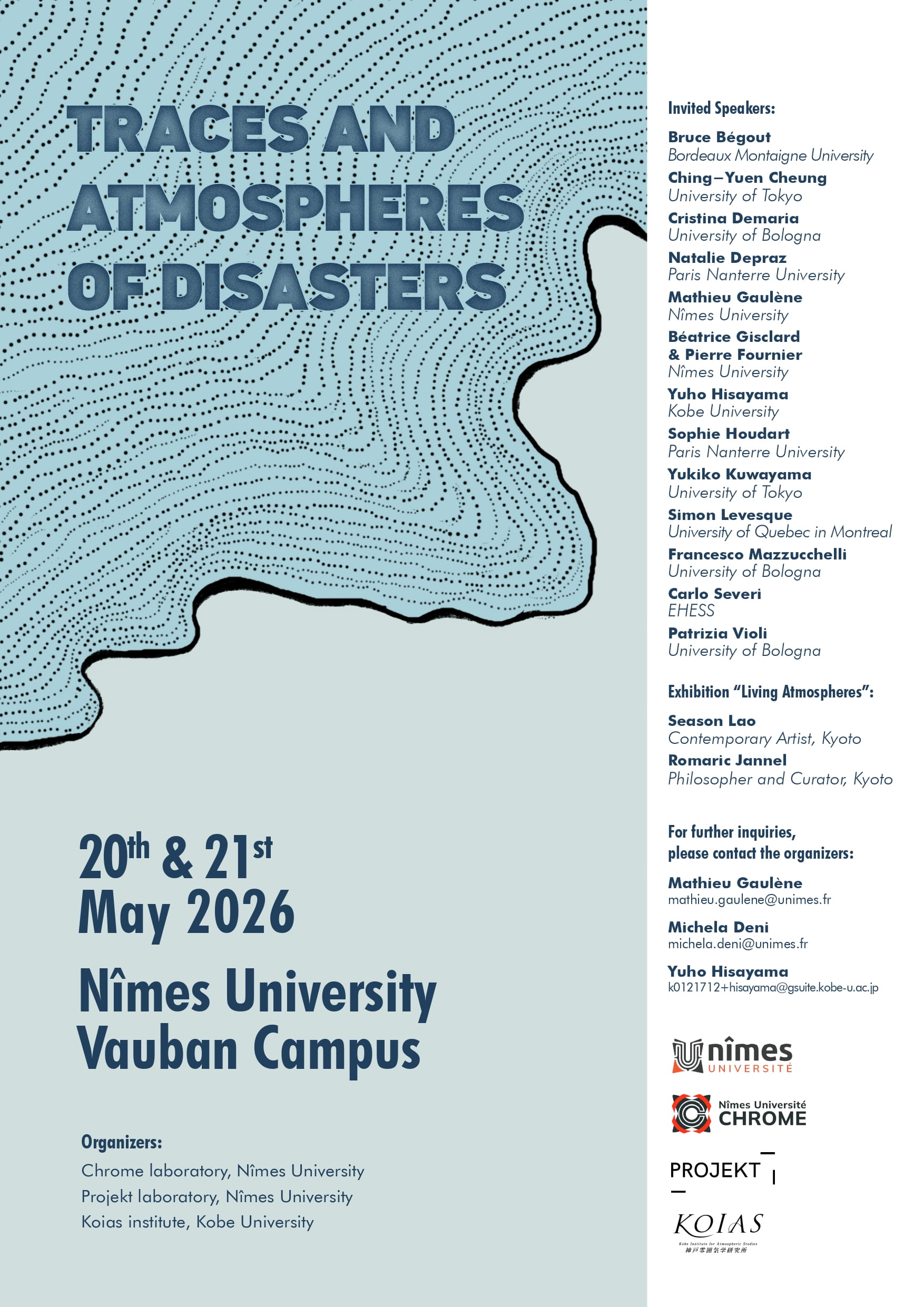 L'événement prévoit deux jours de rencontres sur le site Vauban et une exposition à découvrir dans la chapelle récemment inaugurée sur le site Hoche. Les inscriptions à cet événement sont ouvertes et les participants sont invités à préciser si leur participation se fera en présentiel ou distanciel (le lien de visioconférence sera disponible prochainement).
Les deux jours de colloque international se tiendront en anglais.
Découvrez le programme :
Hoche Campus, Chapelle Hall
5 pm : Vernissage of the exhibition “Living Atmospheres / Atmosphères vivantes” in presence of the artist Season Lao
Vauban Campus, Lecture Hall A3
8:30 - Arrival of participants / Welcome Coffee (H001)
9:00 - Introduction talks
Benoît Roig (President of Nîmes University), Yuho Hisayama (Director of Koias and organizer), Patrizia Giannoni & Oscar Navarro Carrascal (Directors of Chrome lab), Michela Deni (Director of Projekt lab. and organizer), Mathieu Gaulène (Organizer, Chrome lab.)
Michela Deni
Directrice du laboratoire PROJEKT, Professeure des Universités en Sémiotique, sémioticienne
michela.deni@unimes.fr
Mathieu Gaulène
Enseignant-chercheur en anthropologie, CPJ au sein de CHROME
mathieu.gaulene @ unimes.fr
Téléchargez le programme complet
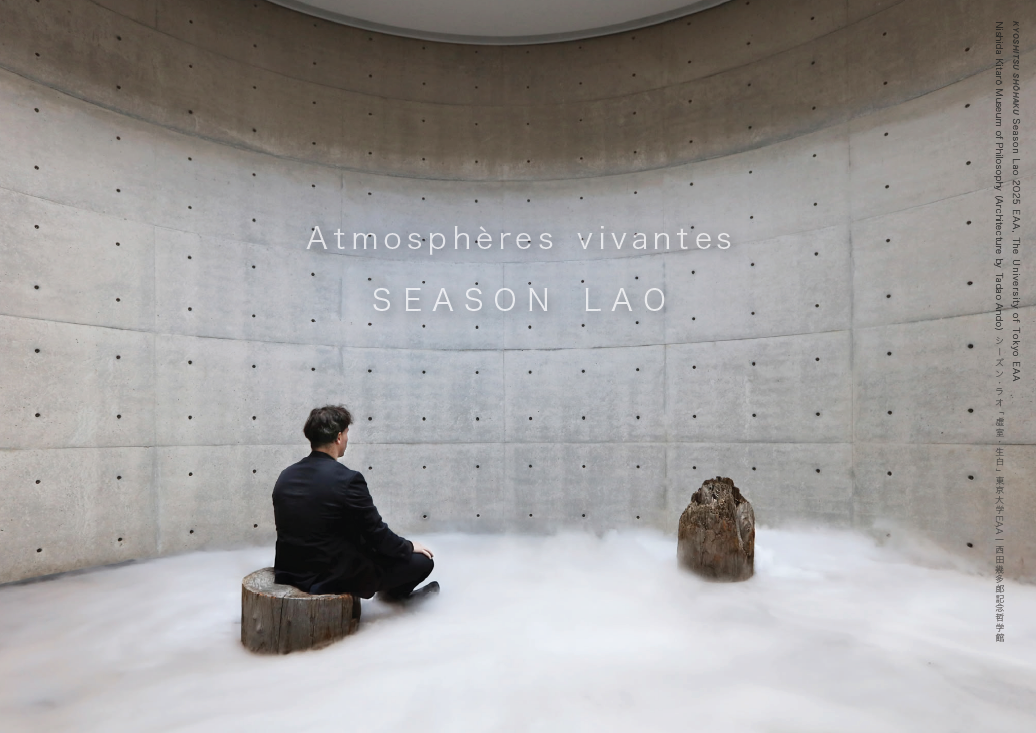
Découvrez d’importantes œuvres de Season Lao : une réflexion esthétique sur l’atmosphère, la vulnérabilité et la survie installée dans la chapelle historique de l’université de Nîmes
